



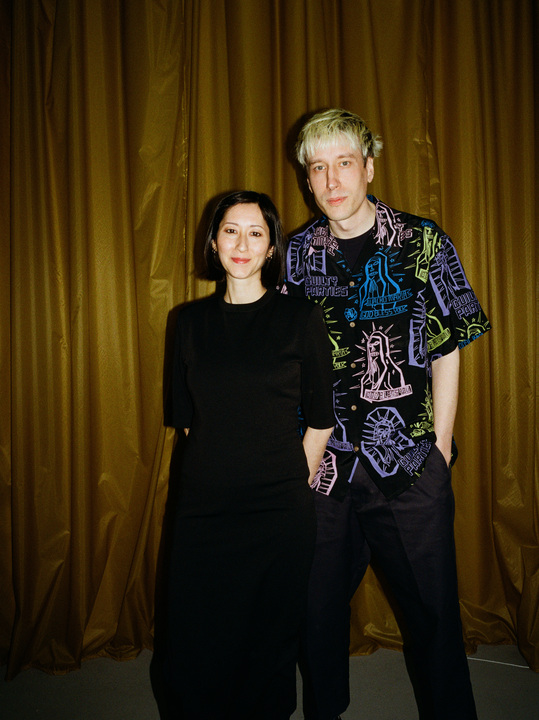
The exhibition "Doitsu Art Buchmarkt" delves into the contemporary artbook scene in Germany. Here, we will be showcasing artbooks and zines selected by 5 pioneering curators from the German artbook sphere. In this interview, TABF will be detailing each curator's practice and intent behind their selection. Among the curators is Studio Yukiko, a Berlin-based creative agency which was founded by Michelle Phillips and Johannes Conrad.
ー We have asked you to select artbooks by German-born or Germany-based artists. What are the key points of your selection?
As a studio that has worked on indie magazines for many years, we have a huge love for illustrators, artists, collectives and galleries who are keeping the zine and indie publication scene thriving. Therefore we’ve brought with us publications from Colorama - a wonderful riso print, publisher and project space from Berlin doing amazing collective and political projects. Also they are working with some of our favorite illustrators. Also we’ve brought 26 pieces (a tiny tiny selection from RFI Galleries 1500+ Zine library from artists from or living in Germany. Our own work has also leant towards an unpolished style and the zine community have forever been on the forefront of expressing transient ideas, thoughts and stories in a beautifully defiant way. Other than that, we’ve bought books from some of our favorite local artists and some books we’ve collaborated on. It’s an eclectic mix, but eclecticism is what we love and what we’ve loved about the German design and illustration scene.
ー Aside from book and magazine designs, you also take on a variety of projects including visual identity for exhibitions and brand campaigns. What does an artbook mean to you?
It’s such a timeless object. Good Art books don’t lose value. We spend so much time working on projects that are fleeting - campaigns for a season or event, identities that will live for a couple of years, social media assets that disappear in a day.. but art books are a manifestation of a project or body of work that everyone can own and keep forever. It’s getting increasingly hard to find good budgets for books and they take a lot of hours to make, so it’s an honor that we are able to make a lot of them.
ー One of Studio Yukiko's designs characteristic is to convey stories and concepts through visuals. The magazine "Flaneur" also seems to incorporate storytelling as part of its approach. How did storytelling become the backbone of Studio Yukiko's design?
I think doing Flaneur has shaped the way we work so much. It was the first magazine we ever did, so it was a big experiment for us at the start. It allowed us to work closely with many people outside of the design field and many cities around the world. It taught about collaborating with artists in a meaningful and hands on way. Since then we’ve been exploring what design can really add to narrative and how art books can be an extension of an exhibition rather than just a document of it. Similarly we always try and take a narrative approach to our identity and corporate work - after all identities are an expression of a group of people working towards the same goals.
ー Berlin attracts a lot of artists, making the city as unique as it is. As a studio based in Berlin, how do you see the city?
It’s an ugly mess and that is somehow beautiful to us. It’s a city full of tensions, so there is so much to explore and draw inspiration from. We’ve been lucky to be here for quite a long time, so we’ve seen it evolve and go through a lot of change. I guess we have too as a studio. I don’t believe we could have done it like this anywhere else.
ー A quick message for our Japanese audience?
As a half Japanese person living in Berlin, I am so honored to be in Japan a place where i’ve drawn so much inspiration from, and bring some of my inspirations from home with me.